Email Us: boys2menyouthprograms@gmail.com
Call Us: (515) 771-1639

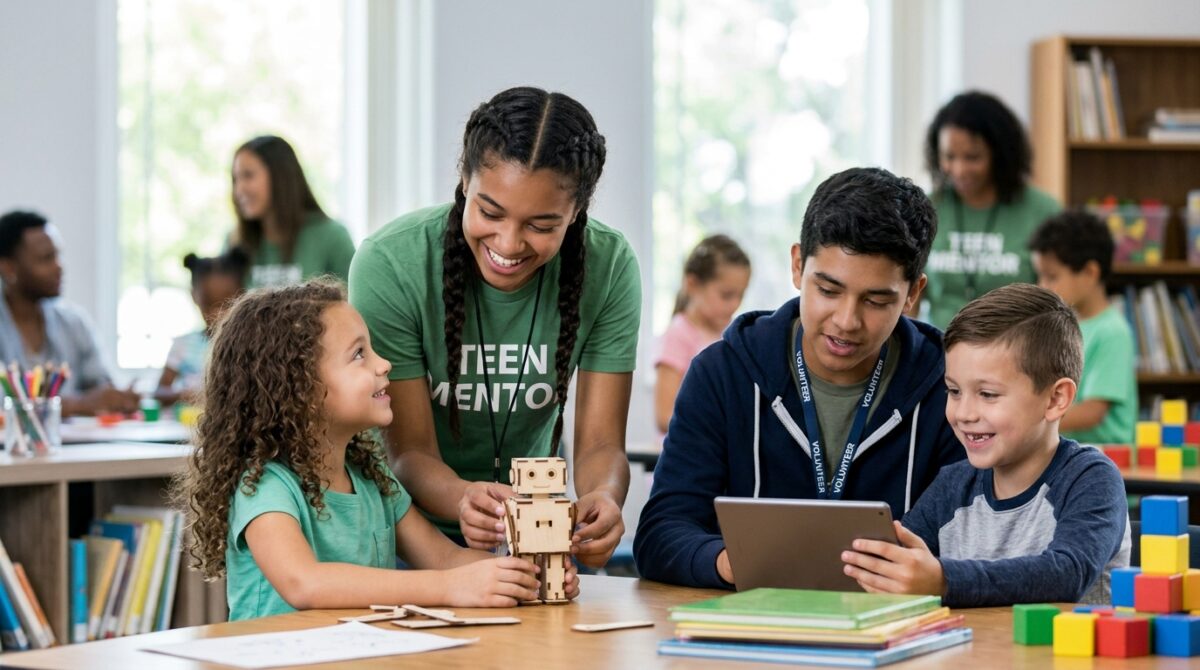
High school students who mentor younger kids build leadership, empathy, and communication skills while giving elementary and middle schoolers a relatable role model. The relationship benefits both age groups and strengthens the wider community in the process.
There is something powerful about watching a fifteen-year-old sit down next to a nine-year-old and just listen. Younger children may find teen mentors approachable because they are closer in age and may share some familiar experiences. That connection is the heart of peer mentoring, and it turns out the benefits run in both directions.
Parents sometimes assume mentoring only helps the younger child. In reality, teen mentors can benefit from the relationship too, developing skills and experiences that support their own personal growth. Leadership skills, patience, and a genuine sense of purpose are hard to teach in a classroom, but they come naturally when a teenager is responsible for guiding someone younger.
This kind of hands-on experience also gives teens a much clearer picture of who they are becoming, well before they head off to college or their first job. Guiding a younger child through a tough moment teaches lessons that no textbook can replicate.
Teen volunteer mentoring pairs high school students with younger children, usually in an elementary or middle school setting, for activities like tutoring, sports, arts and crafts, or simple conversation. Unlike a formal adult mentoring relationship, this setup leans on a shared generational gap that makes younger kids feel understood.
The structure varies by program, but the goal stays the same. A teenager shows up consistently, builds trust with a younger mentee, and models the kind of behavior and attitude that younger children naturally want to copy.
Younger children look up to teenagers in a very specific way. A teen is old enough to seem impressive and cool, yet young enough to still feel approachable. That combination makes teens uniquely effective at reaching kids who might tune out an adult giving the exact same advice.
When a teen mentor shares that reading used to be hard for them too, or that they struggled to make friends in fourth grade, a younger child listens closely. It feels like proof that things get better, coming from someone who just lived through it.
Peer mentoring benefits show up on both sides of the relationship. Younger kids gain academic support, social confidence, and a sense that someone older cares about how their day is going. Teen mentors, meanwhile, build the kind of soft skills that colleges and employers consistently look for.
Communication improves quickly when a teenager has to explain a math problem in simpler terms or calm down a frustrated seven-year-old. Patience grows because mentoring rarely goes exactly according to plan. And responsibility becomes real, not theoretical, the moment a younger child is counting on a teen to show up.
A lot of parents picture mentoring as something formal, almost like a tutoring appointment. In practice, it usually looks much more relaxed. A teen might spend the first few minutes catching up with a younger mentee about how their week went, then move into a shared activity like a board game, a craft project, or a bit of homework help.
That relaxed structure is intentional. Younger kids open up more when they do not feel like they are being tested or evaluated. The teen mentor is there to build a relationship first, with skill development happening naturally alongside it.
It is easy to focus only on the individual teen or the individual child, but the ripple effect reaches much further. Communities with active mentoring programs tend to see stronger bonds between age groups, fewer behavioral incidents in schools, and more young people who feel a genuine sense of belonging.
Teens who mentor are also significantly more likely to keep volunteering as adults. That means the habits built during high school do not disappear after graduation. They tend to shape a lifelong pattern of showing up for other people.
Local high school volunteer opportunities in Des Moines give teens a chance to put these skills into practice close to home. Helping run an after-school session, coaching a youth sports activity, or supporting a classroom project all give teens hands-on leadership experience while making a visible difference for younger boys in the community.
These local opportunities also carry weight on college applications and job resumes, since they show sustained commitment rather than a single day of service.
Not every program is structured the same way, so it helps for parents to know what makes a strong one. Look for consistent scheduling, background checks and training for teen volunteers, and clear communication with families about what each session will involve.
A program that welcomes questions and keeps parents informed tends to build more trust on both sides. That trust matters, since younger kids pick up quickly on whether the adults around them feel confident about the arrangement.
Mentoring is not just a feel-good activity. It doubles as real skill development, and the list of what teens gain is longer than most people expect.
Being someone a younger child looks up to forces a teenager to think before they act. That kind of accountability builds leadership instincts that carry directly into future jobs and college life.
Explaining ideas to a younger audience sharpens a teen’s ability to communicate clearly. Mentors also learn to listen closely, since younger kids often need patience before they open up about what is really on their mind.
Spending time with a younger child who is struggling builds real empathy. Teens start to notice emotional cues they might have missed before, and that awareness tends to improve their relationships with peers their own age too.
Younger kids do not always follow instructions the first time, and disagreements come up often. Teen mentors get regular practice managing frustration calmly, a skill that serves them well long after the mentoring session ends.
Balancing schoolwork, sports, and a weekly mentoring commitment teaches teens how to prioritize their schedule. Younger kids depend on that consistency, which pushes teen mentors to follow through even when life gets busy.
Watching a younger child improve in reading, sports, or simple social confidence gives teen mentors a genuine sense of pride. That feeling builds self-worth in a way that few other high school activities can match.
| Participant | Key Benefits Gained |
| Teen Mentor | Leadership skills, empathy, communication, resume and college application strength |
| Younger Mentee | Academic support, social confidence, a relatable role model, improved behavior |
| School Community | Stronger peer relationships, reduced behavioral issues, increased sense of belonging |
Mentoring programs for at-risk youth empower teens to positively impact younger boys who seek guidance and encouragement. Join Boys 2 Men Youth Programs today and give your teen a rewarding opportunity to lead, mentor, and make a lasting impact in the community!
What age should a teen be to start mentoring younger kids?
Age requirements vary by program. Some programs accept teen mentors in early adolescence, while others require participants to be older based on the responsibilities involved.
Does teen mentoring look good on a college application?
Yes, consistent mentoring can give teens meaningful experiences to highlight in college applications, particularly when it demonstrates leadership, responsibility, service, and long-term commitment.
How much time does a teen need to commit each week?
Time commitments vary by program. Some programs meet weekly, while others use different schedules based on their structure and the needs of participants.
Can shy teenagers still be effective mentors?
Yes, a teen does not need to be highly outgoing to be an effective mentor. Good listening, patience, reliability, empathy, and a willingness to engage are important mentoring qualities.
What kind of activities happen during a mentoring session?
Sessions often include homework help, sports, games, and simple conversation, all designed to build trust and confidence over time.
Do parents need to be involved in the mentoring process?
Parents are usually kept informed of general progress, though most of the day-to-day interaction happens directly between the teen mentor and the younger child during scheduled sessions.
Teen volunteer mentoring is one of those rare arrangements where everyone involved comes out ahead. Younger kids gain a role model who feels approachable and real. Teens develop leadership, empathy, and communication skills that will benefit them throughout their lives. Communities grow stronger as a result, one mentoring relationship at a time.
Boys 2 Men Youth Programs creates meaningful connections through various types of mentoring programs for boys. Our goal is to give teens a supportive opportunity to serve as positive role models while helping younger boys develop better habits, stronger confidence, and valuable life skills. Join our program today and give a young boy the encouragement he needs to grow while giving your teen the opportunity to lead, mentor, and make a lasting difference.
The weekly after-school sessions actively promote teamwork, leadership, and personal responsibility, and offer 5th-grade boys opportunities to engage.




Finally, Boys 2 Men provides a celebratory event for all its participants who make it to the end of the year. At the conclusion of the event, each youth receives a Leadership trophy commemorating their successful completion of the program. They also receive their Boys 2 Men Youth Programs t-shirt, dinner, and tickets to attend activities such as Sky-Zone or Go-Cart riding as one way to continue to expose them to other ways to have fun. On average, we celebrate nearly 40 students each year. We also recognize our nearly 10 volunteers who have helped us make it through the years.
Funding is very important and needed for our organization to continue providing programming in the Des Moines community. We could definitely use donations of any amount to continue our programming of football camps, camping, tours to historical sites, local sporting events, snacks, meals and drinks, t-shirts, games, supplies, and a host of other necessities as we continue to be proactive in our efforts to save our youth. This is important because programming and all activities are 100% free to all participants.



Do you want to join the team, volunteer, donate, or have questions? Let us know!
© 2026 – All Right Reserved Boys 2 Men Youth Programs.